

The barrier-care words shoppers search for
Barrier, calming, the look of redness, fragrance and pores: how to put the words shoppers use onto your tags accurately.

Shoppers walk in with a vocabulary. They have read it online and they use it at the counter: barrier, calming, redness, fragrance-free, non-comedogenic. When your tags use the same words, clients find the right product faster. When the tags stretch those words, you create a problem. Here is how to match the vocabulary and stay accurate.
Barrier
What shoppers mean: skin that feels dry, tight or uncomfortable and needs a comforting cream.
Tag line: "Supports a comfortable moisture barrier."
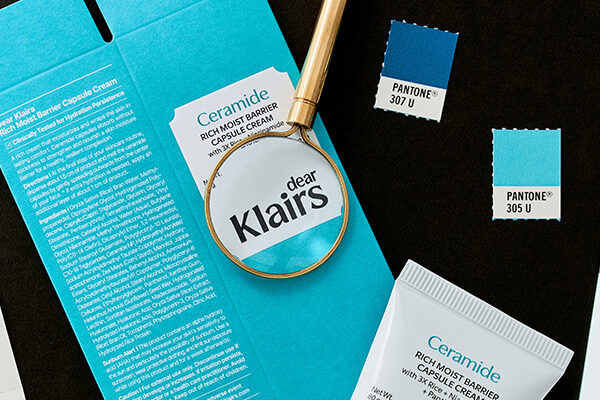
Product fit: Rich Moist Barrier Capsule Cream, 80 g at $26.00 MSRP. It is built around ceramide capsule technology, 3X Rice and 3X Ceramide. The tiny ceramide capsules melt into the cream as it is rolled onto skin, helping create a comfortable moisture barrier without a sticky finish.
Calming
What shoppers mean: skin that feels reactive or looks stressed.
Tag line: "For calmer-looking skin" or "helps skin feel comfortable".
Product fit: Supple Preparation Unscented Toner, 180 mL at $30.00 MSRP or 30 mL at $13.00 MSRP. It is a pH-balanced toner with centella asiatica, licorice, beta-glucan, panthenol and sodium hyaluronate. Brand-reported units distributed: 8M. Suggest it when a client wants a calming step without changing the rest of their routine.
Redness
What shoppers mean: skin that looks flushed.
Tag line: "Helps calm the look of redness." Always write "the look of". Keep condition names off tags and out of staff scripts entirely.
Product fit: the Blue Line, positioned around irritation relief and barrier care and built around guaiazulene.
Fragrance
What shoppers mean: nothing added for scent, and often no essential oils either.
Tag line: "No added fragrance." Use it only for products whose ingredient list shows no fragrance and no essential oils. Both products above qualify.
The trap: product families share names. Rich Moist Soothing Cream is a different product from the Barrier Capsule Cream, and its ingredient list includes orange peel, lemon peel, lavender, eucalyptus and geranium oils. Check the ingredient list of each product, never the family name.
Pores and clogging
What shoppers mean: a product that should not clog pores.
Tag line: use "non-comedogenic" only where the brand states testing. The EGF Blue Youth Activating Drop is tested for primary irritation on sensitive skin and for non-comedogenicity. For other products, leave the word off the tag.
Before you print: a five-point check
- Does every tag word describe how skin looks or feels?
- Does every redness mention say "the look of redness"?
- Did you check the ingredient list before writing "no added fragrance"?
- Is "non-comedogenic" used only where the brand states testing?
- Do your online listings use the same words as the shelf?
Consider grouping tags by these words on one shelf: a "barrier" row and a "calming" row. That way a shopper can scan for their word first.
Shelf note: "Barrier and calming picks. Each tag lists fragrance notes for that product. Ask us about textures."
Tag wording questions come up often in the Wednesday desk update. See case packs in the catalog.
이 글의 제품
이어서 읽기

Supple Preparation Cica Toner
The cica sibling of the Supple toner: what is different, who it suits and where it goes in the routine. Answers for your staff.
Vegan and cruelty-free: saying it accurately
What you can say about Dear, Klairs at brand level, what needs a product-by-product check, and copy you can print today.

Fundamental Ampule Mist
A green tea water mist with ampoule-style care. Three ways clients use it, who it suits and how to demo it at the counter.