

Starting K-beauty with one case
Test K-beauty with a single case of one product: choosing the first SKU, placing it, and reading sell-through before you reorder.
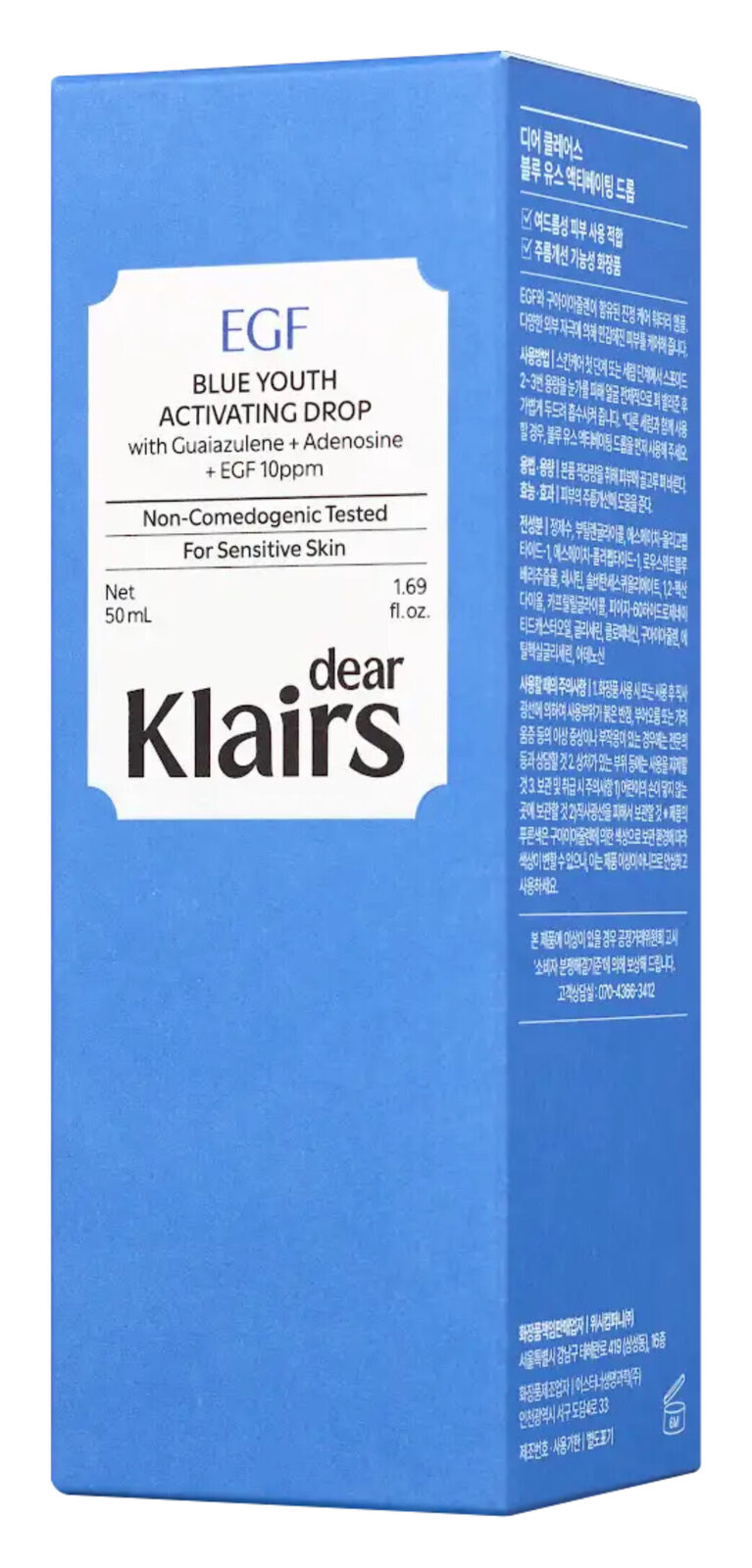
Adding a new category does not have to mean a big opening order. The minimum on the desk is one full case of a product; products ship in sealed case packs from California, or your carrier can collect. That makes a one-case test realistic for a small boutique. Here is how to run one so the result tells you something useful.
Step 1: Choose the first product
Use this checklist. A good first SKU should pass all four.
- It explains itself. A client should understand it from a glance and one sentence.
- It adds a step. Adding a step is an easier ask than replacing a product a client already likes.
- It has a clear price. One size, one MSRP, easy to remember.
- It has support you can point to. A published result, recognition, or a product story staff can repeat.
The EGF Blue Youth Activating Drop fits all four. It is blue, which starts conversations. It goes first after cleansing, before toner, so it slots into any routine. It comes in 50 mL at $39.99 MSRP, with a 10 mL trial size at $12.99 MSRP. Its one published result: post-blemish marks improved 23.21% after 4 weeks in a study of 20 adults (ProbeM Skin Research Center). It was a 2026 Seoul Awards Beauty Winner and Soko Glam Best of K-Beauty 2024, with 1M+ units distributed as of April 2026 (brand-reported).
Pick one size for the test so your numbers stay clean. Lead with the 50 mL; it tells the full story. For price-cautious shoppers, keep a few 10 mL trial sizes by the register.
Step 2: Place it where it will be seen
- Eye level on your main skincare shelf, or near the register.
- One open tester with a small card: what it is and where it goes in the routine.
- Next to the cleansers, since the Drop is the step right after cleansing.
- Every staff member trained on the counter script below. A test can fail quietly if only one person can explain the product.
Step 3: Measure sell-through
Sell-through is units sold divided by units received. Keep a simple log.
- Day 1: Record units received. Open one as a tester and log it separately. Photograph the shelf.
- Week 1: Count units sold. Note which sales followed a tester try and which were walk-up purchases.
- Week 2: If sales are slow, change one thing before judging the product: move it closer to the register or add a sign.
- Week 4: Calculate sell-through. Compare it with a product you already carry at a similar MSRP.
Step 4: Decide on the reorder
A simple rule of thumb: place the next order when about a third of the case is left, so the shelf never sits empty while a new case is on its way. If the case sold steadily, consider adding the 10 mL at $12.99 MSRP as a register add-on, or a second Blue Line product beside it. If it sold slowly, look at placement and staff scripts before you drop it.
At the counter: "This blue serum goes on first, right after cleansing, before toner. Want to try a drop on the back of your hand?"
Ready to run the test? Apply for a wholesale account, then see case packs in the catalog. The full product story is in the EGF Blue Drop webbook.
이어서 읽기

Supple Preparation Cica Toner
The cica sibling of the Supple toner: what is different, who it suits and where it goes in the routine. Answers for your staff.
Vegan and cruelty-free: saying it accurately
What you can say about Dear, Klairs at brand level, what needs a product-by-product check, and copy you can print today.

Fundamental Ampule Mist
A green tea water mist with ampoule-style care. Three ways clients use it, who it suits and how to demo it at the counter.